
Why Do I Have Knee Pain When Climbing Stairs? The Hidden Link to Your Lower Back
Many people are surprised to feel sudden pain in the knee while climbing stairs — even without injury or accident.They often assume or have been diagnosed it’s due to “less cartilage” or “wear and tear” from aging. But the truth is, most unexplained knee pain actually starts from the lower back, especially when there’s a misalignment around the L3–L4 vertebrae.
At Osso Bone Care, we always begin by asking one simple question: “Is your knee pain caused by an actual knee injury or sport injury, or is it an unknown reason or sudden pain?”
If you’ve had a sports injury, fall, or direct impact on the knee, then the pain likely originates from the knee joint itself.
But if your knee pain appears suddenly, without any known cause, or gets worse when climbing stairs, walking uphill, or standing long — it’s almost always linked to a misalignment in your lower back.
Before seeking treatment, ask yourself: what is the true cause of your knee pain?
Understanding the Connection Between Your Lower Back and Knee Pain
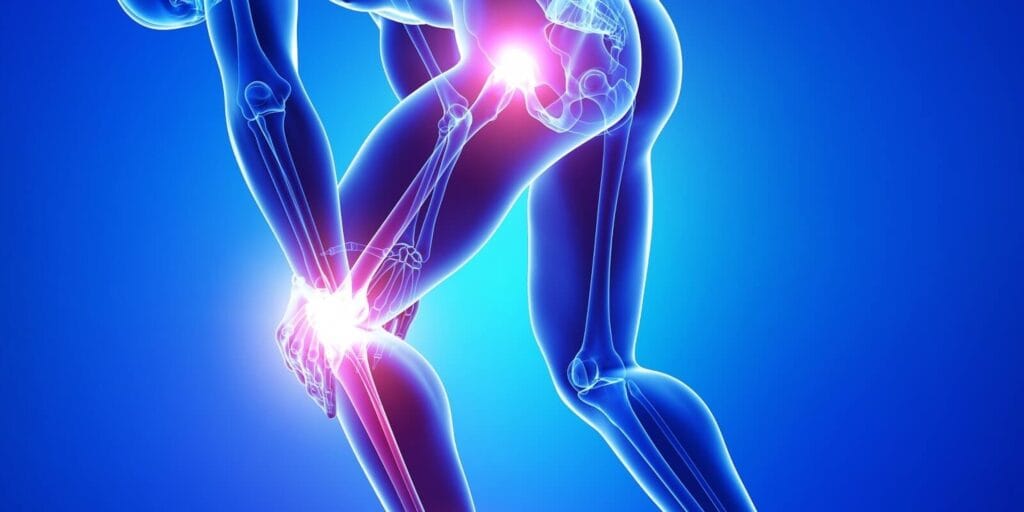
The L3–L4 region of your spine controls the nerves that supply the thigh, knee, and part of the leg.
When these spinal segments become misaligned due to poor posture, long sitting hours, uneven walking, or minor injuries, they can compress or irritate the nerves that travel down toward the knee.
This causes referred pain, meaning the actual source of the pain is not the knee itself, but the lower back.
You may feel symptoms such as:
- A dull ache or pressure in the knee
- Sharp pain when climbing stairs or standing from a seated position
- Weakness or instability when walking downhill
- Occasional numbness or tingling around the thigh or knee
Over time, this nerve irritation affects muscle balance and joint movement, making the knee work harder than it should. That’s why even though you may not feel pain in your lower back yet, as the pain appears first in the knee.
Why Treating Only the Knee Doesn’t Solve the Root Cause
Many patients are treated only for their knee pain only with creams, medication, massage, physiotherapy, acupuncture or knee exercises.
While these can offer short-term relief, the pain often returns because the root cause (misalignment at L3–L4) remains untreated.
When the lower spine is not properly aligned:
- The nerve flow to the knee becomes restricted
- Muscle coordination between the thigh and calf weakens
- Pressure on the knee joint increases abnormally
This creates a cycle of recurring pain. Until the spinal misalignment is corrected, the nerve supply to your knee cannot recover fully.
Why Climbing Stairs Triggers the Pain
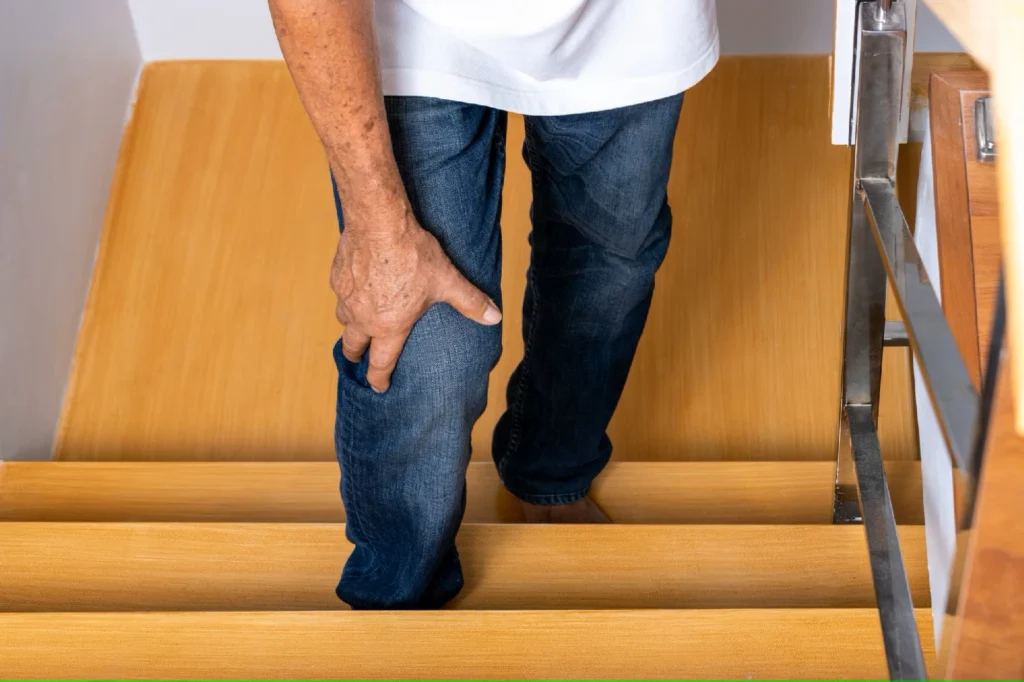
When you climb stairs, your knee takes on three to four times your body weight with each step.
If your spinal alignment is off, this uneven nerve signal causes muscle imbalance and poor joint tracking, making the knee joint absorb more force than it should.
That’s why people with L3–L4 misalignment commonly feel knee pain:
- Only on one side
- When climbing or squatting
- Even without swelling or visible injury
It’s not the stair that causes your knee pain, it’s your spine failing to support the movement properly.
Signs Your Knee Pain May Be Coming from Your Lower Back
- No history of knee injury but recurring pain
- Pain that moves or changes side
- Knee stiffness after sitting long hours
- Pain that worsens after bending forward or standing up
- Weakness in one leg or unbalanced posture
If these sound familiar, your lower back alignment needs to be checked even if you don’t feel pain there yet. Often, the back issue begins silently and only shows up as knee pain first. If left untreated, it can later develop into lower back pain, sciatica, or hip discomfort.
How Chiropractic Care at Osso Bone Care Can Help
At Osso Bone Care Chiropractic, we don’t just treat where it hurts, we find out why it hurts.
Our approach starts with a Full Spine + Pelvic Digital X-ray to see if there’s misalignment at the L3–L4 segment or pelvis imbalance affecting your lower limbs
Once identified, gentle chiropractic adjustments help restore the correct alignment, relieve pressure on the nerve, and rebalance your muscle and joint coordination.
In many cases, patients who’ve been struggling with “knee pain” for months experience relief once their spinal misalignment is corrected not from knee treatment alone.
We may also combine this with:
- Osso Flexion Distraction Adjustment Technique® – to release pressure between spinal discs and restore normal nerve flow.
- 3D Spinal Decompression Therapy® – to correct structural compression safely and effectively.
- EMS/TENS therapy – to reduce inflammation and muscle tension around the affected nerves.
If your knee pain happens suddenly without injury, keeps returning even after treatment, and feels worse when climbing stairs or standing long…
Then it’s time to get a spinal X-ray and chiropractic evaluation, not just a knee checkup.
Don’t wait until the pain spreads to your hip or lower back. The earlier you identify the spinal misalignment, the faster your recovery.